
TMJ physiotherapy in Maple Ridge
Physiotherapy for jaw pain, clicking, clenching, and related headaches
TMJ physiotherapy at Asana helps with jaw pain, stiffness, clicking or locking, teeth clenching or grinding, and headaches linked to the jaw and neck. Care is hands-on and exercise-based. No referral needed to book in Maple Ridge.
What TMJ physiotherapy is
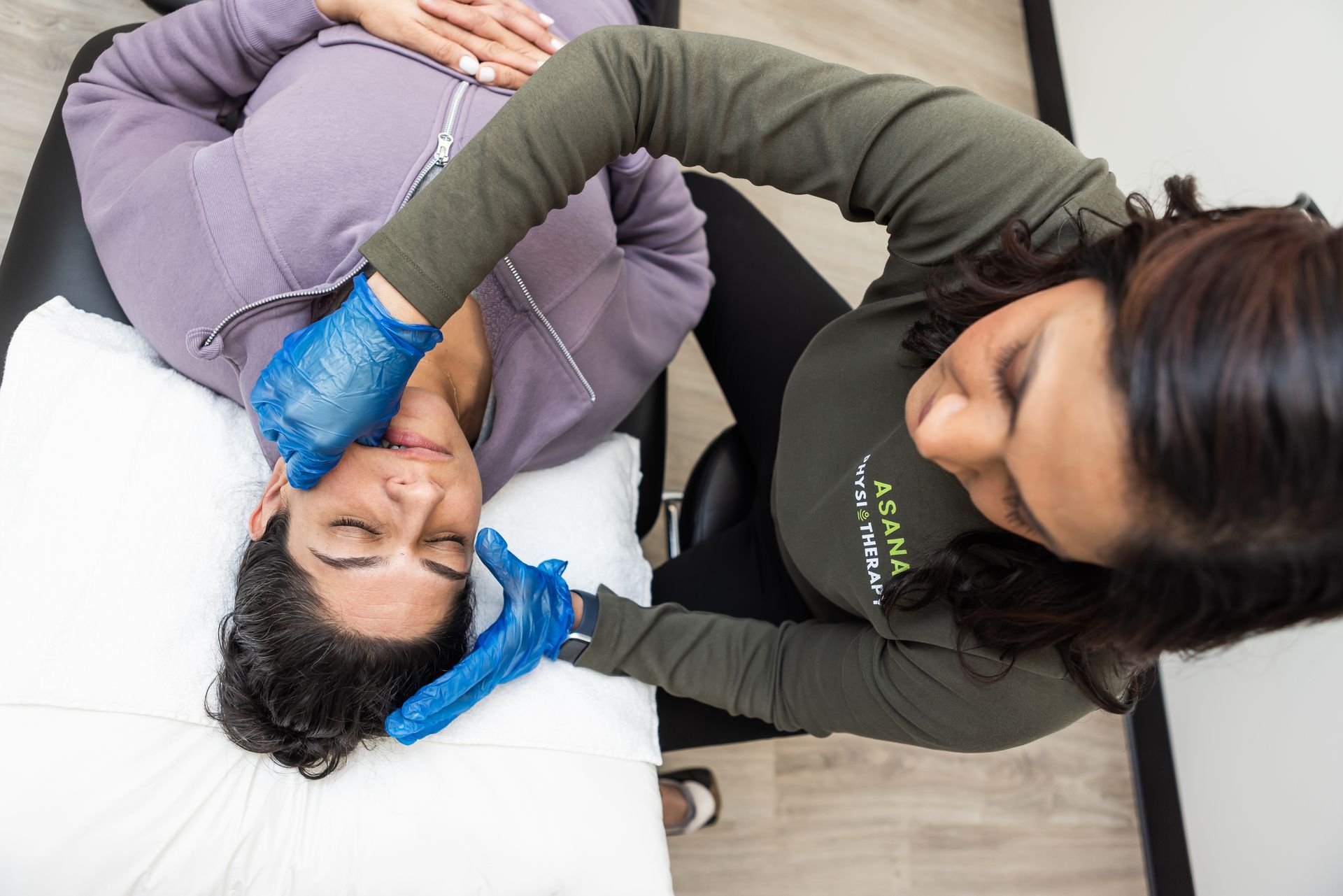
TMJ physiotherapy at Asana Physiotherapy in Maple Ridge is physiotherapy-led care for jaw pain, clicking or locking, teeth clenching or grinding, and headaches linked to the jaw and neck. A physiotherapist assesses the jaw joint, the muscles that move it, and how the neck and posture feed into your symptoms. When it fits your plan, acupuncture or IMS dry needling can be included in standard physiotherapy treatment without a separate modality surcharge. No physician referral is required to book.
The TMJ, or temporomandibular joint, is the hinge that connects your jaw to your skull. It lets you chew, talk, yawn, and open and close your mouth. TMD, or temporomandibular disorder, is the clinical term used when that joint or the muscles that control it are painful or not working well. People often say they have TMJ when they mean jaw joint or muscle symptoms. On this page, TMJ physiotherapy means assessment and treatment for those problems, including TMD.
A physiotherapy assessment helps sort out whether the joint, the muscles, the neck, or a mix of factors is driving what you feel, then builds a plan matched to your goals.
What we help with
People commonly book TMJ physiotherapy in Maple Ridge for concerns such as:
Jaw pain and stiffness
Pain or tightness with chewing, talking, yawning, or resting the jaw.
Clicking, catching, or locking
Sounds or catching with opening and closing that needs joint and muscle assessment.
Teeth clenching or grinding
Muscle overload and joint irritation linked to clenching, grinding, or daytime jaw bracing.
Headaches linked to the jaw or neck
Temple, face, or headache patterns tied to jaw tension, clenching, or neck load.
Limited mouth opening
Reduced opening or guarded movement that affects eating, dental care, or daily comfort.
Face, temple, or ear-area discomfort
Symptoms around the face, temples, or ear region when musculoskeletal drivers are involved.
Neck and posture contribution
Neck stiffness or posture load that feeds jaw irritability and day-to-day symptoms.
After dental work or jaw strain
Support when jaw muscles or the joint are irritable after strain, prolonged dental visits, or related load.
If you are unsure whether TMJ physiotherapy is the right first step, contact us. We can help you decide before you book.
Contact the Clinic


How TMJ physiotherapy helps
Care at Asana is assessment-led and individualized. The goal is clearer function and more comfortable day-to-day movement, not a fixed protocol applied to every person.
Your physiotherapist may treat the jaw muscles, joint region, and related neck structures with external manual therapy. When appropriate and with your consent, internal techniques inside the mouth can be part of care. Acupuncture or IMS dry needling may be used for muscle trigger points. You usually leave with jaw mobility and control work, plus neck and posture exercises, and simple strategies for clenching awareness and pacing.
Causes often overlap: clenching or grinding, stress, injury, joint irritation, posture load, muscle tightness, and sometimes dental or medical factors. Physiotherapy focuses on the musculoskeletal side. It does not replace dental or medical care when those are needed, and we can coordinate when that helps.
What to expect at your visit
Your first visit starts with your story and any dental or medical details that matter, then a physical assessment of jaw movement, muscle tenderness, neck involvement, and related posture patterns.
Treatment often begins the same day when appropriate. Internal techniques are only used after a clear explanation and your consent. If something feels too intense, say so and the approach changes.
How often you come depends on irritability, how long symptoms have been present, contributing factors, and how you respond. Your physiotherapist outlines a plan after assessment instead of promising a fixed number of visits up front.
TMJ physiotherapy vs dental care
Dentists and physicians handle bite issues, oral appliances, imaging, medication, and medical causes of facial pain. Physiotherapy focuses on joint mobility, muscle function, neck contribution, and movement retraining.
Many people need both. Physiotherapy is often a strong option when pain, muscle tension, joint irritability, neck involvement, or limited movement are the main drivers. It is not a substitute for dental or medical assessment when those are required.
If something in the session feels too intense or not right, say so. The approach can change immediately.
Insurance and booking
No physician referral is required to book TMJ physiotherapy in British Columbia at Asana.
Direct billing may be available for many extended health plans, and for ICBC or WorkSafeBC when authorized and relevant to your claim. Confirm coverage with your plan or adjuster when needed. Acupuncture and IMS can sit inside standard physio treatment when indicated, without a separate modality fee.
Book online or call 604-773-0670. We are at 112-22633 Selkirk Avenue, Maple Ridge, BC V2X 1C7.
Frequently Asked Questions
Book TMJ physiotherapy in Maple Ridge
Book a TMJ physiotherapy appointment for assessment and a clear next-step plan. No referral required.