
Reformer Pilates In Maple Ridge
Two Ways To Use Reformer Pilates
1
Clinical Reformer Pilates
For people recovering from injury, surgery, motor vehicle accidents, or ongoing pain. Exercises are chosen and modified for diagnosis, healing stage, and functional goals. The focus is safe movement, graded loading, and rebuilding confidence.
2
Exercise-Based Reformer Pilates
For people who want strength, mobility, posture support, athletic conditioning, or a smarter alternative to generic gym work. Sessions still use kinesiology assessment and progressive programming, with more emphasis on performance, fitness, and long-term movement quality.
Many clients move from clinical work into exercise-based sessions as they improve. Your Kinesiologist helps you decide which path fits now.
What Is A Reformer
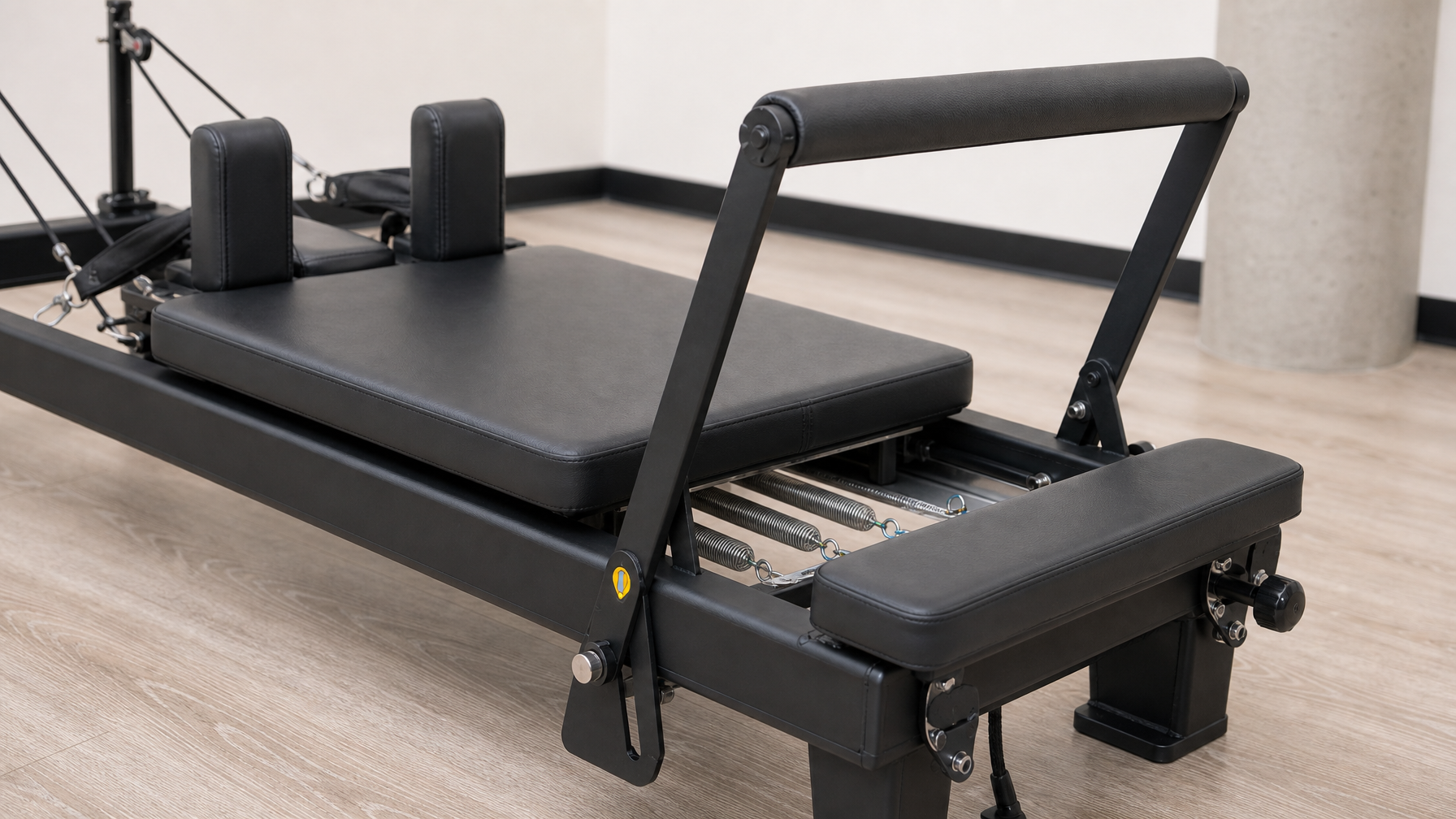
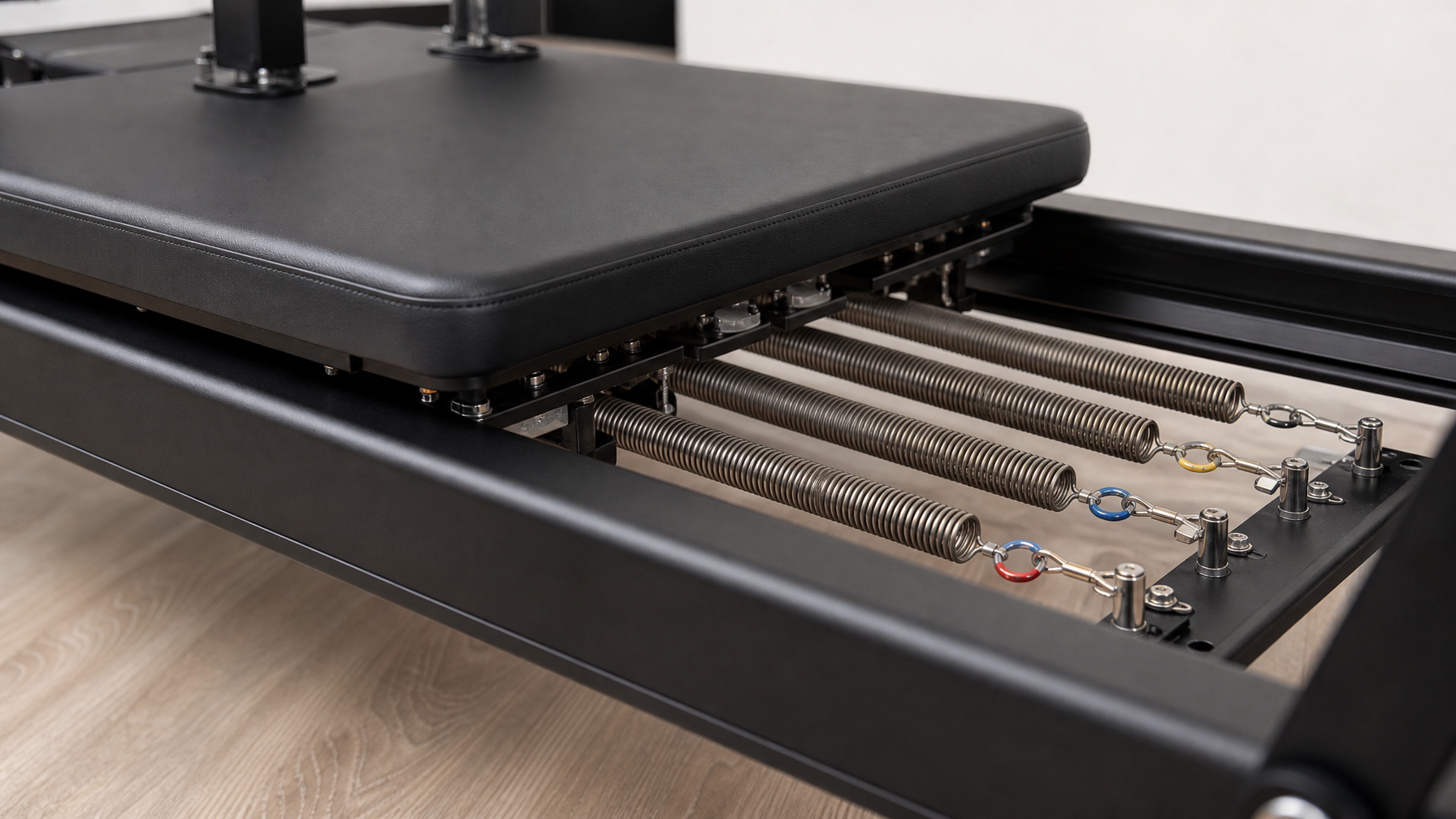
A Reformer is specialized exercise equipment with a sliding carriage that moves along a frame, resisted by adjustable springs. You push or pull the carriage using straps, a footbar, or ropes while lying, sitting, kneeling, or standing.
Spring resistance can be set from very light to quite strong. That fine control makes the Reformer useful for rehab and for progressive exercise. Work can stay gentle when tissues need protection, then become more challenging as strength and control improve.
Key features your Kinesiologist may use:
- Carriage and springs for controlled resistance
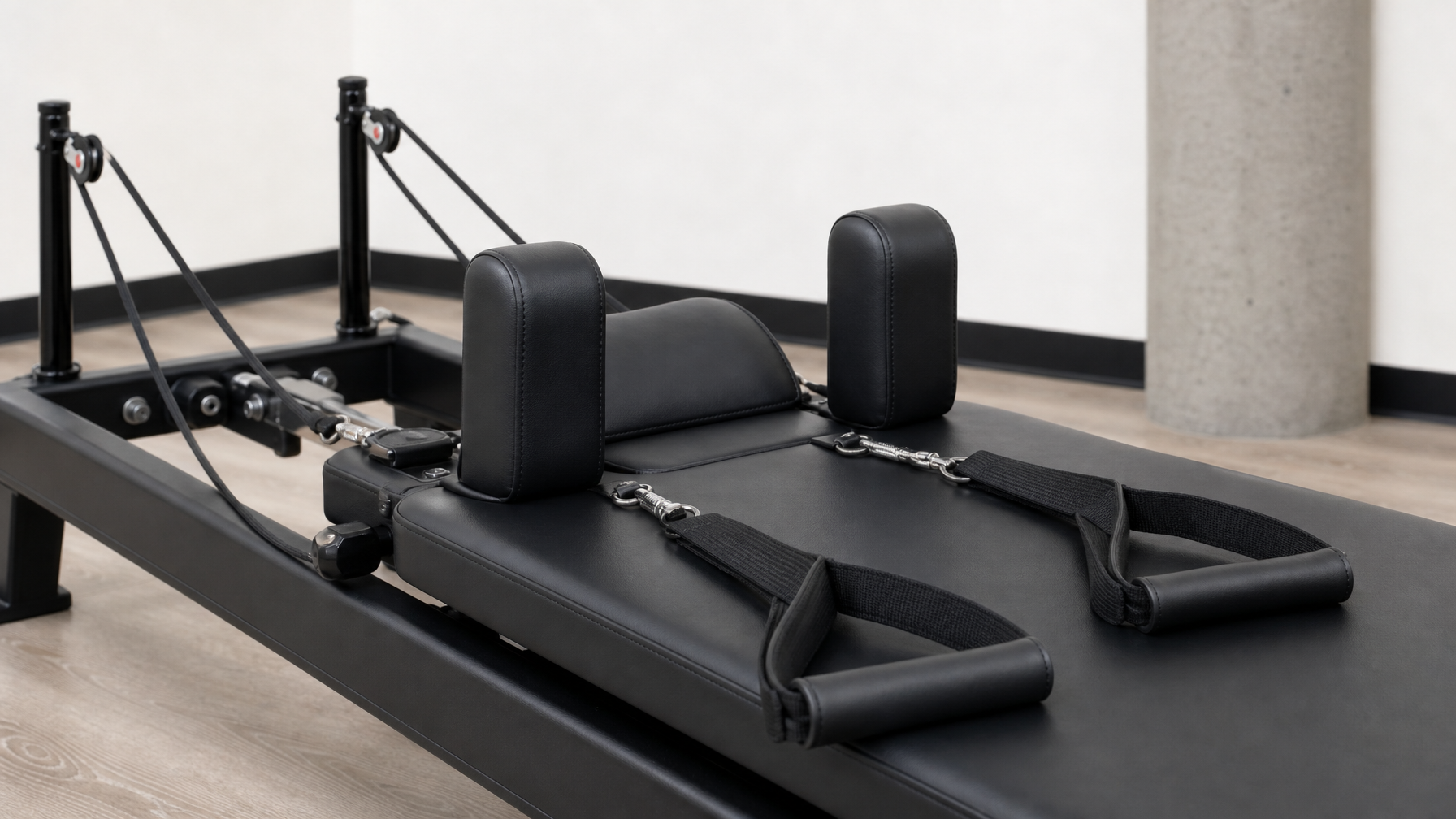
- Straps for upper- and lower-body work
- Footbar for leg press, arm work, and core exercises
- Headrest and shoulder blocks for spinal support and alignment
- Tower or vertical attachments for standing and kneeling balance work
Clinical Reformer Pilates
Clinical Reformer Pilates uses the Reformer in a therapeutic, injury-management context. Instead of a fixed class routine, each exercise is chosen for your presentation and goals.
The focus is on retraining movement that has broken down after injury. That can include muscle guarding, loss of core control, altered walking patterns, or hesitation with movement. Work stays within pain-free or carefully graded ranges.
Sessions often progress in phases:
Stabilization: Reduce guarding, restore basic mobility, and re-establish safe movement patterns.
Strengthening: Increase spring resistance and exercise complexity to rebuild strength, endurance, and control.
Functional integration: Add practical movements that mirror work, sport, or daily life.
Because the equipment supports body weight and guides direction and speed of movement, clinical Reformer work suits people recovering from whiplash, soft-tissue injuries, spinal strains, joint injuries, and post-surgical rehab. For many of these clients, unsupported floor or gym exercise can be too aggressive too soon.
Exercise-Based Reformer Pilates
Exercise-based Reformer Pilates is still instructor-led and individualized. It is a good fit when your main goal is fitness, strength, mobility, athletic support, or staying active with better form.
Your Kinesiologist still assesses how you move, then builds progressive Reformer work for:
- Core strength and control
- Hip, shoulder, and spinal mobility
- Posture support for desk-based or repetitive work
- Conditioning with lower impact than many gym machines
- Return-to-sport preparation after clearance from injury care
- Balanced full-body strength without a membership studio model
- Sessions remain private and goal-directed. You get the challenge of Reformer training with clinical eyes on technique, load, and progression.
Who Benefits
Clinical and exercise Reformer Pilates can suit a wide range of people.
Motor Vehicle Accident Recovery
Supported, graded movement for whiplash, low back strain, and soft-tissue injuries when authorized as part of care.
Chronic Neck, Back, Hip, Or Shoulder Issues
Controlled loading when general exercise has been hard to tolerate.
Post-Surgical Rehab
Strength and range rebuilding in a low-load environment as tissue heals, when appropriate for your plan.
Injury Recovery
Supported, predictable progress on the Reformer to rebuild strength, mobility, and confidence after injury.
High-Performing Athletes
Strength, mobility, and movement quality to support training, competition, and return to sport.
Adults Looking To Exercise
Progressive Reformer training for fitness, core strength, and better movement without a group class format.
Desk Workers
Structured work for posture, core control, and tightness that builds up from long hours of sitting.
Adults Returning To Activity After A Long Break
A gentle, structured entry point for core, posture, and full-body conditioning.
Older Adults
Balance, joint-friendly strength, and functional movement support.
Your first visits include a conversation about your history, goals, and what you want to return to in daily life, work, or sport.
Your Kinesiologist then guides you through Reformer-based exercises matched to clinical rehab or exercise goals. Positions may include lying, sitting, kneeling, or standing. Springs, straps, and the footbar are adjusted throughout so the work stays safe and progressive.
Sessions are one-on-one clinical or exercise appointments, not drop-in group fitness classes. Length and frequency depend on your plan and goals. Many clients attend as part of a structured kinesiology program.
You remain in control of intensity. Tell your Kinesiologist if something feels sharp, unsafe, or beyond your comfort so the session can be adjusted in real time.
FAQs
Have a question? We’re here to help.
